Free tool · Split generator

Training split generator.
A week that fits your week.

Tell it how many days you can train, for how long, and what you’re after. It picks the split that suits that schedule, fills each session with exercises for your equipment, and shows how many hard sets each muscle gets in the week.

Days a week
Per session
Goal
Experience
Where you train

Your split

Full body.

With this many days, training the whole body each session gets every muscle worked two or three times a week, with a rest day between sessions.

  1. MonFull body A
  2. TueRest
  3. WedFull body B
  4. ThuRest
  5. FriFull body C
  6. SatRest
  7. SunRest

Hard sets per week

About 10 to 20 sets per muscle group a week suits most people building muscle.

Chest
11
Back
9
Shoulders
10
Arms
9
Quads
13
Hamstrings & glutes
11
Calves
0
Core
0

Keep this week

Copy it, share the link, or plan it in Lifterly to log every set and progress week after week.

How the split is chosen.

The number of days decides most of it. With 2 or 3 days, every session trains the whole body, so each muscle still gets worked two or three times a week. With 4 days, an upper/lower split trains everything twice with shorter sessions. 5 days add a push, pull and legs block to an upper and a lower day. 6 days run push/pull/legs twice.

Your goal sets the reps and rest: heavier and longer rests for strength, 6 to 15 reps for muscle, denser sessions for fat loss. Beginners get fewer sets per exercise; advanced lifters an extra set on the big lifts. Session length decides how many exercises fit, counting the time under the bar and the rests.
Reading the weekly sets.

The bars count the hard sets each muscle group gets in the week. For muscle growth, research reviews point to roughly 10 to 20 sets per muscle per week for most people, spread over at least two sessions. Fewer still works, especially for beginners; much more is hard to recover from.

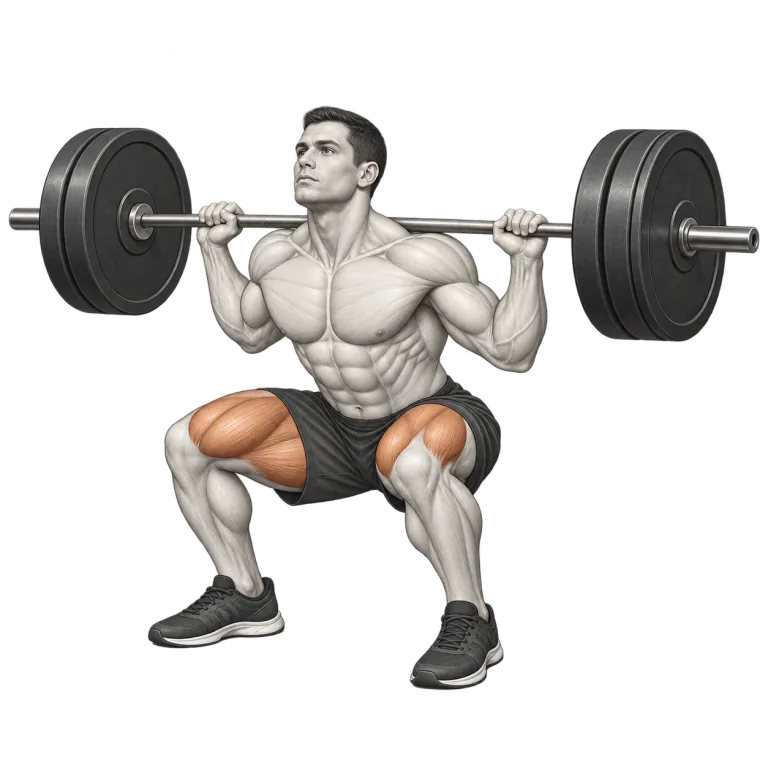
Legs are split into quads and the posterior chain (hamstrings and glutes), because squats and hinges load them differently. If one group looks low for your goal, add a set to its exercises or a day to your week.

Make it yours.

The generator gives a sound starting point, not the only answer. Swap an exercise for one you prefer in the same pattern, browse alternatives in the exercise library, and keep the structure for 6 to 8 weeks before changing it, adding weight or reps as you go.

  • Copy the week as text to keep it in your notes
  • Share it: your choices stay in the address bar
  • Open the matching program for progression and deload rules

In the app

Plan this week in Lifterly.

Every exercise here comes from Lifterly’s library, and each split is a training style in the app. Plan your sessions on the days you picked, for free, or let Lifterly Pro build them from your goal, equipment and last results, with weights set for you.

Questions

A few things worth knowing.

What is the best training split?

The one you can keep. For most people, full body three times a week or upper/lower four times a week trains each muscle twice weekly, which works well for strength and size. Push/pull/legs suits people who can train five or six days.

How many days a week should I lift?

Three to four days covers most goals. Two days still brings progress if the sessions train the whole body. Beyond five days, recovery, sleep and food matter even more.

Can I use this split at home?

Yes. Choose “Home” and the generator uses dumbbells, a bench and a pull-up bar instead of barbells, cables and machines.

Is this generated by AI?

No. The generator follows fixed programming rules, so the same choices always give the same week. In the app, Lifterly Pro’s AI workout planner goes further: it reads your history to set weights and adapts sessions as you train.

Keep exploring.